Showing posts with label Terry Rees. Show all posts

Thursday, 7 March 2024

Treasure from the Gloom by Terry Rees


 The sky was deeply overcast, accentuated by the dense overhang of trees, a dank and cold introduction to the day. The conditions mirrored my feelings, low spirit  and suppressed awareness. For all of us there are moments in life when our internal disorientation and accompanying sadness steals our normality.  I was on retreat in Norfolk, staying in a convent located in a beautiful and secluded corner of the countryside, sadly now closed. Exceptional pressures at work, continuing responsibilities at church, and a  heavy pastoral burden for a loved one,  a burden equally shared between my wife and myself,  rendered my spirit weary. I was here in Norfolk because I had  persuaded myself  that a short withdrawal, to press the ‘pause button’, hoping to silence the ambient noise of labour and responsibility, to be ‘still’, to reflect and pray, was necessary.

                          I had taken a walk through a copse that lay within the extensive grounds of the convent and the path unexpectedly  took a sharp turn - and there it was!  A little way off  to the side,  nestling at the foot of leafless trees, penetrating the gloom with a piercing brilliance, a single isolated clump of snowdrops bravely flaunted its dazzling beauty.   It is difficult to convey adequately the sheer impact this image had upon me, cognitively, emotionally and spiritually. I received it as a spiritual grace, a symbol  of Divine presence in dark places. It was also  an icon of hope, Christian Hope, not wishful thinking, nothing less than the glimpse into an alternative future. Mind and spirit were elevated from negative to positive, from gloom to light.

                        Some readers might wonder if my imagination has gone into overdrive in addressing the literary task of recording this narrative. True, one of the dangers for any writer is to drift into hyperbole when recording the past. All I can say is that I have tried to be very careful not to do this. For me,  this truly was a moment of revelation, the revealing of a different possibility, an alternative  mental and emotional space.  To be very blunt,  and I make no apologies for saying this, it was a ‘God Moment’, a ‘Word of Knowledge’ as it is sometimes described. It reflected the Celtic spirituality idea of being in a ‘thin place’,  a geographical or situational location where we encounter the boundary between the human and the divine as  a very thin, porous membrane rather that a thick wall.  It does seem that this is a foundational work of  the Holy Spirit, transforming so-called ‘ordinary’ encounters into the realm of spiritual surprise.  Needless to say, the remainder of my time on retreat was framed quite differently.  Life’s pressures certainly did not vanish in a puff of smoke, but my faith in the abiding presence of God, in all situations, through the whole varied landscape of life, was strengthened.  It was this experience that confirmed my growing interest in the power of images to inspire, inform and encourage. It is, of course, why Jesus of Nazareth utilised parables and metaphors as  ‘mind pictures’, and for myself this encounter on that dark, dank February afternoon has become a personal ‘living parable’.

                          The foliage of the snowdrop plant is not very impressive, yet the flower that erupts is delicately brilliant, shouting for attention, flaunting its beauty, a beauty that is the fruition of unseen movements beneath the cold soil. Something has been happening beyond human vision and now the fruits of those processes are dazzlingly visible, gifting us a glimpse and a promise of a spring and summer yet to come. For me this was a reminder that God works beneath the visible surface of life, in the cold, dark, uncomfortable places,  and yet is the author of spiritual surprise. I think sometimes we are called to trust in the invisible, sometimes frustratingly slow, work of the Spirit. Did not the Apostle Paul crystallise this out for us from his turbulent experience:-

“And we know that in all things God works for the good of those who love him”

The poet Christina Rossetti beautifully presents us with a challenge, suggesting that we need to have the faith to look at the often unimpressive present and yet see the future it is moving towards.


Lord, purge our eyes to see

Within the seed a tree,

Within the glowing egg a bird,

Within the shroud a butterfly.


Till taught by such, we see

Beyond all creatures Thee,

And hearken for Thy tender word,

And hear it, “ Fear not, it is I. “                       


As we navigate Lent, and in due course move into Holy week, we can reflectively navigate the movement from the cold, dark, gloom of Maundy Thursday and Good Friday, into the dazzling brilliance of  Easter Sunday.  Surprisingly, Vincent van Gogh is reputed to have said “Colour isn’t everything in a painting, but it is what gives it life”  And it is surely the RESURRECTION that provides dazzling colour to the Gospel narrative and its deepest meaning. The apparent end was actually a beginning. For all of us, every end incubates a new beginning too.

Terry Rees


Sunday, 8 October 2023

Promise and Privilege - An Autumn Reflection by Terry Rees


 A Kilpeck  village conker, Herefordshire 2022


Every season brings bounty that we often take for granted. Indeed, it is all so regular, so predictable, at least within its variation on a theme, and therefore perceived as ‘ordinary’. Regularity and reliability tend to 'normalise' things  to the extent that intrinsic  beauty can become hidden in plain sight. As a young boy, every autumn was heralded by the arrival of the laden horse-chestnut tree  and the fortuitous fall of the treasured fruits. I have very clear memories of the ‘conker season’ over several years in my boyhood. On school days I habitually chose to spend my return bus fare on sweets or a comic and pay the price by walking for about an hour ( at lingering boy’s pace) to reach home. The journey took me from the far eastern edge of the town to the far western edge where I lived. I got to love that walk and I believe it gifted me with a deep sense of place, people and space.  The journey took me past the ‘Common’ , an extensive open space that was inhabited by a row of majestic horse chestnut trees. It was our joy and delight to routinely collect the trees’ fallen jewels. We even accelerated nature’s pace by dislodging them with carefully aimed missiles.  But one day something different happened, or I should say, my experience of a routine event was different.


                       I must have collected many hundreds of conkers over the years but as I harvested a particular specimen on that particular late afternoon, enticed by the lovely, bright, shiny, red/brown fruit invitingly peering at me through the slit in the husk, I was halted in my routine deliberations by a sudden piercing, overwhelming realisation.  I was the very first  person, perhaps even will be the only one,  in the whole of the universe, to see, hold and own this treasure of nature. Through the mists of time I can now re-live something of that deep sense of unique privilege, an unfamiliar sensing that was  powerful in its suddenness and unexpectedness. My mind and emotions were arrested in a flow of awe. I also think I incubated the question “How on earth could a massive giant of a tree come from such a small thing that I can put in my pocket?”

Now, I am fully aware that I am narrating this event over seventy years later, and can only use the language of an octogenarian with a crowded spectrum of adult experience. I simply cannot speak with the voice of the boy I was. This is always the autobiographer’s problem – narrating NOW about THEN. Incidentally, this was also the Gospel writers’ challenge, in partnership with the Spirit, recording in large part the testimony of others, many years after the events, in concert with their own existential spiritual understanding and experience. This does not invalidate the narrative but it does emphasise the importance of sensing , feeling the deep meaning, inferences and emotional content of a narrative. The words can be different, but the transmitted and internalised SENSE received is what only matters.


                       I now believe that on that rather dark, misty November afternoon I experienced  a rare moment of juvenile TRANSCENDENCE, a very brief moment of stepping outside the sheer intensity of the here-and-now, the world of the ‘ordinary’, into a brief intellectual and emotional space of  ‘OTHERNESS’. Wordsworth the poet coined the phrase ‘spots of time’, small moments that on the surface are ostensibly ordinary and trivial, yet invade our person in what can only be called ‘other-worldly’, and which we subsequently carry as persistently recurring memory throughout life. There appears little logic to it, perhaps because these experiences are more emotional than cognitive. Mind you, the moment was transitory. I soon stuffed my pockets with conkers, skewered holes,  attached strong string and the next day proceeded to bash the living daylights out of other boys’ specimens! But that brief moment of philosophical, and I believe spiritual, revelation stays with me, even today. It has become for me a living parable. So much so, I confess that even today I hardly ever pass a fallen conker without picking it up and cherishing its beauty!


                       Now, PROMISE and PRIVILEGE are common, everyday words, but they have strong religious and spiritual connections. My boyish moment of transcendence carried both the PROMISE, by virtue of a mere glimpse of an emergent beauty through a hard, tough prickly shell, and the PRIVILEGE of acquisition and personal ownership of a new treasure. The Old Testament and the New Testament texts are rich in these twin concepts, and often each is embodied in the other:-


“See, I have engraved you in the palms of my hands”.        Isaiah 49:16

“Come to me, all you who are weary and burdened, and I will give you rest. Matthew 11: 28

“I tell you the truth, today you will be with me in paradise”          Luke 23:43   


In short, Christians are a people that are in large part defined by a sense of Divine promise and privilege. However, this privilege is granted by Grace, open to all, free access to the Divine through Christ  and the abiding presence of the Spirit. Because they are graces, not rewards, not earned, not achieved by our own endeavours, not manufactured, they lie firmly within God’s love and purposes. The promise and privilege offered in Christ is always open, never closed, open and free to everyone. It is our response through acceptance of both that brings fruition. But there is a cautionary note here. Promise and privilege  demands a special responsibility. It requires us to reflect upon the deep meaning and latent power of both concepts, in how we live, how we relate to one another, Jew, Gentile, religious, non-religious, humanist, atheist, agnostic and everyone else! Access to relationship with the Divine is eternally open, and  that is the greatest privilege and promise of all.


Thursday, 9 March 2023

A Lenten Reflection - Finding Beauty in Dark Places - by Terry Rees


 Spring is on the way! It might be cold, windy, or wet today but we can embrace the promise of warmth and brightness in the tomorrows to come.  Hopefully that will remain so even in the context of apparent climate change! I think so, although intensities may vary. Spring carries its own emblems of promise. It offers up its own gifts of this entity we call ‘beauty’ - daffodils extravagantly radiating their bright, proud yellowness , buds on trees swelling with latent intent, sleeping plants awakening as they  determinedly push up from their cold grave the early shoots of tomorrow’s glory.


                Etty Hillesum, a young Jewish woman who lived through the appalling days of Nazi occupation in Amsterdam, until her death in a concentration camp at the age of 29, has gifted us a remarkable diary of her  intense spiritual journey. She struggled to live a meaningful life, when all around her the very idea of ‘meaning’ had been captured by the forces of evil. She lived every day with the terrible fear of being arrested by the Nazi occupiers. Nevertheless, in a truly extraordinary way, she reached into the depths of her inner self, and her inner world,  in search of the Divine. A significant element in her spiritual life was her discovery of the intense beauty of flowers, a focus for her senses that reached deep into her inner being. She brought flowers into her room at every opportunity; yellow and purple crocuses in a tin, red and white tulips that bent gracefully towards one another, sprays of flowering cherry, rose-red sweet peas, magnolia blooms, Japanese lilies, yellow tea roses, and many more. She delighted in buying flowers for herself and others. For Etty,  her love of flowers became  a deep immersion in the possibility of finding beauty in the darkest of times and the most dangerous of places. It was surely more than a distraction, more than an emotional and psychological escape, essentially nothing less than an expression of her own internal spiritual ‘flowering’, as one commentator has said.


                As the season of Lent unfolds we inevitably are orientated towards the dark place of Jesus’ final journey in his earthly ministry and the dreadful spectre of the crucifixion. Can we really find ‘beauty’ here?  Are there any flowers to be gathered in such a place? A glance at the Oxford Dictionary reminds us of the many ways we use the term ‘beauty’. Usage of the word demands a range of definitions, demanding excursion into the realms of philosophy, poetry, psychology, art, theology and many other fields. I suppose the underlying sense is that of a person, an image, an encounter, a landscape, even a sporting moment, emotionally capturing our attention and somehow changing us internally, at least for the moment, and sometimes for the long-term. Lives have been, and are, transformed by an encounter with the beautiful.  

                But what of the cross ? There is surely nothing uglier than a crucifixion?  But sometimes true beauty lies in the meaning, not the surface appearance.  How else can we measure the depths of a couple’s deepening love for one another?  As time advances the deepest quality of the shared love lies predominantly in the meaning of the relationship, rather than just the romantic attraction. Ultimately, in God’s creative order, we are bonded by the underlying meaning of our relationships. And it is in the meaning of The Cross that an extraordinary beauty lies. The first disciples of Jesus had to initially cope with only knowing half of the story . The terrible spectre of the crucifixion, as far as they could perceive, carried a piercing finality – the great adventure was over.  The Jesus they had obediently followed,  the Jesus they truly believed would inaugurate the establishment of a new personal, political, social, religious and spiritual order, was now lashed and nailed to a cruel Roman cross, a terrible and intended public spectre of failure and ignominy. They were yet to see the end of the story, the empty tomb, the Risen Lord appearing in so many ways. And above all, they were yet to experience the companionship and power of the living Christ and the Holy Spirit in their transformed lives, the eternal reality of the Resurrection and God’s infinite love. It was a reality that they were soon to experience.

                For us today, as we journey through Lent, and into Holy Week, we can see the whole story at a single glance. We already know in advance the end of the story! It is a beautiful continuum,  an extravagant flow of Divine love, redemption, salvation and empowerment.  For convenience of reflection we tend to focus on the discrete elements of the whole story as we make our journey through Lent,  but the dazzling beauty of the cross lies in its embedding within the whole story of Divine love’s self-outpouring, and self-sacrifice. In other words, there is a beauty in the Cross, but it lies in its meaning within the Divine movement and purpose. The artist Vincent Van Gogh is reputed to have remarked “colour isn’t everything in a painting, but it is what brings life to it“. The seasons of Lent and Easter are our pathway into the ‘painting’ of Divine love and it is the dazzling colourful brilliance of the resurrection that illuminates the whole story and brings beauty to the darkness of the cross.  


LORD,

This Lent and Easter season, may I see deeply into the meaning of The Cross and Resurrection.

 May I take the time to look into the depths and not just upon the reflective surface.

 May your Spirit challenge me to respond to the complete story of the Gospel. May I see again the beauty of Divine love, and commit my life to Christ and servanthood. 


Friday, 25 November 2022

The ‘Hiddeness’ of Landscapes by Terry Rees


                         The ‘Hiddeness’ of Landscapes         


                   View on the path from Lynton to the Valley of Rocks (North Devon)

                      Photograph by the author                                                            


                             It is an inescapable fact that our eyes cannot allow us to focus on close and distant views at the same time.  We have to make a choice and sacrifice one for the other. Landscape images result from choosing the big picture at the expense of close-up focus.  In this sense landscapes hide as well as reveal. As beautiful as the above view is, it effectively ‘hides ‘ so much; - the small mammals, reptiles, insects, birds, flowers, stones, rocks and  a host of other things . We cannot even be sure that a resident mountain goat or walker is not lurking behind the gorse bushes in the foreground!  Every landscape has a deep structure. Artists know this well when they choose the perspective and focus they wish to explore. I can only imagine the painter Paul Nash wanted to illustrate the apparent ‘hiddenness’ inherent in a landscape when he produced an  unusual painting of a downland landscape with white cliffs in the far distance. Surreally, the foreground is incongruously dominated by two seemingly detached and ‘out-of-place’ objects – a large, loose stump of a tree and a tennis ball, both of which could feasibly be hidden somewhere in the landscape?  I suspect Nash is reminding us that there are many things ‘lost’ in a panoramic perspective. We simply cannot see into the deep structure by taking a distant view. Incidentally, the novelist is perhaps in a more advantageous position, as she/he cunningly works to shape the fine detail of individual characters, whilst also weaving them into the all-encompassing ‘big picture’ of the story. A literary masterpiece achieves both. 

                                   This idea of the ‘macro’ perspective necessarily obscuring the  ‘micro ‘ view seems to be fundamental to our perception of the world that we encounter through our senses and thinking. We need both perspectives in order to maximise the validity of our understanding and judgment. It is well known that some people are especially good at focusing on fine detail , whilst others are particularly gifted at seeing the ‘big picture’.  A healthy organisational team will include both.


                       And I think this can relate to our personal spiritual formation, our growing as we make our journey with God.  We need to focus on separate occasions at both the near and the distant, the close detail and the sweep of the big picture. And the Christian faith does have an enormous panoramic sweep , from the first century through to today, from early small bands of believers meeting in modest homes to our great institutional denominations with a vast array of dedicated worship buildings. And the accompanying  theology and spirituality also has an expansive  sweep, from evangelical to catholic, from Biblical literalism to metaphorical interpretations, from fundamentalism to liberalism, from heavily formalised and traditional worship to charismatic exuberance, from Protestant to Roman Catholic and Orthodox, from tiny chapel congregations  to vast cathedral gatherings. The spiritual landscape available to us is truly extraordinarily expansive. It is by any measures a massively ‘big picture’.   However, there are  pertinent questions that need to be asked. Is it possible that this vast panorama of religious landscape can actually ‘hide’ the most crucial elements ? In other words, can the ‘fundamental particles’ of the Faith be unwittingly obscured by the sheer scale of this religious panorama? Conversely, we might also ask whether the particular niche in this landscape that we individually inhabit  obscures the richness of other locations. 

                       Jesus of Nazareth told a very short story that might be relevant to these questions. A man accidently stumbled upon buried treasure. Being very honest he knew that he could not own the treasure unless he also owned the field in which it was found. Such was his desire for the valuables that he hid them again and then did a remarkable thing. He sold all that he possessed in order to purchase the field ang gain ownership of the treasure.  Perhaps Jesus had in mind the ancient practice of burying valuables for safe keeping in dangerous times, with the express intention of retrieving them in later safer times.  Perhaps he had in mind treasures that had been hidden in the landscape many decades ago , abandoned and unclaimed. Only later discovery could reveal such bounty. Indeed, ‘spiritual formation’ - the gaining of new insights into the Gospel of Christ, the Church and discipleship – depends upon both our Intention and divine revelation through discovery. But in order to discover we need to actually walk the landscape and be open to the nearness of the Spirit’s enlightenment. Walking the landscape is always walking with Jesus, the Christ. Christ is the deep structure.  

                       So, perhaps this Advent we could intentionally expose ourselves to new ways of meditating on the Word, trying different ways of praying, learn about the hidden riches in different approaches such as Celtic, Charismatic, Evangelical, or Orthodox spirituality, visit a church of a different tradition, embrace the discipline of reading a challenging book, join a Lent group, or reflect more deeply on the advent and birth narratives . The possibilities are very personal and various. It is worth reminding ourselves that EXPECTANCY is a golden thread running through the New Testament Birth Narratives,  and the challenge before us is to  truly expect personal enlightenment this Advent season. It is a journey that we can make in companionship with the cast of the biblical narrative, and also with one another.


LORD,

This Advent Season, may the Spirit widen the scope of my searching.

May I discover anew the  ‘deep structure’ in the Christmas story.

May I enter into a focused understanding of Christ as Lord, the eternal treasure that lies at the deep centre of all faith, and indeed, all things.


            NOTE :                Paul Nash’s painting “Event on The Downs” (1934) is not

                                           Illustrated as there would be possible copyright issues.

                                           However, appropriate web searching should enable viewing.


Sunday, 26 June 2022

Losing, Finding, Restoring….. by Terry Rees


  Last year’s COVID lockdown at least provided the space to tackle those jobs that I have been putting off for decades. I managed to clear our loft with its forty-plus years of accumulated paraphernalia, stored under the category of “might be useful sometime”, but rarely was. In total it entailed eight appointments at the recycling centre with a heavily-laden car. It was a rare and interesting lesson in deliberately LOSING things.

                        However, this action was unexpectedly balanced by serendipitously FINDING something, not in the loft but at the bottom of the garden. Ruthlessly thinning out overgrown shrubs took me into inaccessible and dark territory, whereby to my amazement I discovered a standard rose that had been engulfed over the years by the extravagant growth of invasive shrubs. I must have proudly planted it decades ago but busyness and neglect had condemned it to a slow death. I have no memory of planting it or of even being aware of its existence, but I do know that it was definitely not in the garden when we moved in all those years ago. Amazingly, it still showed the faintest glimmer of life and, without much hope, I replanted it  in a sunny position. When summer came it flowered brilliantly and now is a dominant feature.  All its ailments, deficiencies and neglect healed by the caress of sunlight. I think of it now as my “Resurrection Rose”, brought from a botanical dark tomb to life through the ministry of light.

                                    Losing and finding are important themes in the New Testament. Jesus told stories about them. A shepherd risks leaving his flock unattended to recover a lost sheep. A man accidently finds buried treasure and determines to acquire the field in order that he might legally own his discovery.  A woman loses a coin, likely small and decorative, and diligently sweeps the dust-filled floor in order to retrieve it. Extraordinarily, Jesus even presented the paradox of “losing one’s life in order to gain it’.  Christian discipleship truly starts when we make the decision to ‘let go’ of ourselves as the absolute and sole centre of existence in order to live “in Christ”, a vital concept in Pauline theology. In essence we are invited to lose ourselves in order that we can be found ‘in Christ’. Experience of the Divine requires both losing and  finding, but the losing pales into insignificance alongside the satisfaction in finding. Like the woman who extravagantly rejoiced with her neighbours after recovering her precious coin, this thing we call ‘Church’ is in essence a celebration of finding and restoration. It’s beauty lies in the fact that we experience it together, not just individually. Church is never just about worship – it is fundamentally about the growth of a Christ-centred community, nothing less than discovering our true selves through relationship with one another and embrace of the Divine. Vitally, this growth is fashioned by both the underlying and overarching movement of the Holy Spirit, a ‘hidden’ immersion in grace and love. A healthy church does not neglect the presence and ministry of the third person of the Trinity. 

                                    The beauty of a rose is multifarious. The softness of the petals speaks of gentleness, their convoluted folds drawing us into a deep, private centre, a territory only the bees and other insects are privileged to explore. We can only imagine this inner world and recognise that we too have an inner world, a hidden territory, yet one that is known and frequented by God. Our deepest centres are known, inhabited  and nurtured by the love of God and we are all ‘found’, restored and refreshed by the Spirit. Even our shortcomings, our failings, our rough edges, are enveloped in this ‘swirl’ of Divine love, with forgiveness as the ultimate balm of the human soul.

                                    And the intoxicating scent of a fragrant rose! Perhaps a metaphor for the ever-present Spirit of God, an immersion in the flow of Divine presence, a gift of both sweetness and scent that demands the reorientation of the soul towards the beauty and the preciousness of life itself. The scent of a fragrant rose can momentarily overpower  our senses and transport us into an ‘other-worldly’ space.  Fragrance diffuses into every  micro corner of the space into which it is released. Paul the Apostle used the metaphor of scent to challenge the Ephesian Christians to offer themselves in imitation of Christ’s love:-

            Be imitators of God, therefore, as dearly loved children and live a life of love,        just as Christ loved us and gave himself up for us as a fragrant offering and       sacrifice to God.       ( Ephesians 5: 1-2 )

   Yes, we are invited to follow Christ’s example in releasing the fragrance of Divine love as a grace offering. Yes, of course, it may mean knowingly losing something that is an incumbrance to this flow of God’s grace, be it pride, fear, dislike, prejudice, status, self-protection and any other diminishing forces.

A SHORT PRAYER

Lord, help me to lose that which may impede the release of the fragrance of Christ’s unconditional love. And in losing, may I find the joy and peace in being a co-worker in the heavenly and cosmic Divine plan.    


Thursday, 17 March 2022

Divine Flow by Terry Rees


                                                                          DIVINE FLOW


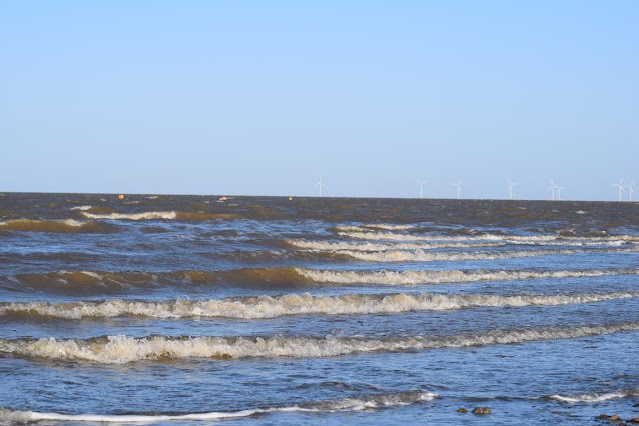
                                                                                                                                                From the Shore at Tankerton


                    Sitting  by the shore on a gentle day, idly watching the waves meet their nemesis, can be a surprisingly beneficial therapy. We all know that the sea has its moods, just like ourselves. In its extremes it can be menacing and destructive as well as gentle and soothing. A reminder to us that we all live within a reality that is experienced more as an ever-changing flux, than a  predictable programme.  But, observing gentle waves breaking on the shore can speak to us of the friendly and peaceful flow of Divine presence, a presence that transcends all situations and all contingent forces. A presence that is never passive, never stationary, but always active, challenging us, changing us, bathing us, cleansing us, shaping us, nurturing us , healing us and, above all, enveloping us in the flow of God’s love. A flow that is present even when, like the Prodigal Son of the parable, we stray from the warmth and security of the Father’s household.

          Paradoxically, the persistent rhythm of breaking waves exhibits the senses of both constancy and change. The regular frequency of the arrival of waves is punctuated by sudden change as the bed of the shore  rises to cause the wave to collapse , break and dissipate.  Perhaps a metaphor for the constant flow of God’s love faithfully arriving and spreading on the shore of our individual and varied lives?

          Those of us who can no longer escape the description of ‘old’ can perhaps also discern here a parable about our life’s ultimate destiny. When we watch waves arriving on the shore we are witnessing the end of a very long journey, across the vastness of the ocean. The breaking of a wave on the shore truly is its final destination, its energy not lost but released , set free, dissipated, shared, absorbed. Faith has taught us that our journey in life will likewise come into ultimate fruition as we reach the shore of fulness of time, in eternity, our very ‘being’ surrendering into the safe beach of God’s heart and love.      

                    However, for those of younger years , perhaps the waves can speak with a different voice. The sea is vast, the way forward seems clear, stretching into the far distance, a horizon always beckoning, the journey exhilarating, a future anticipated and planned with  confidence in the freedom of forward

movement . Yes, obstacles will be encountered from time to time, but the beauty of waves lies in their ability to bend round corners, to get past obstacles.  Worth reminding ourselves that none of us can avoid unexpected impediment in life, a narrowing of options, but God’s love and our responsive faith ensures a continued forward movement within Divine will and purpose. Each impediment is the alpha point of a new centre of outward movement. For each of us, whether old or young, the journey ahead is always in  companionship with Christ, and that which is past, both the commendable and the regretful, is already in the accepting embrace of a loving God and Redeemer.

                   Sea, river, lake and water itself are mentioned over a hundred of times in the Bible, in a variety of literal, metaphorical and parabolic senses. They were, and still are, used symbolically to highlight deeply spiritual emotions and actions such as cleansing, healing, baptism, Spirit empowerment, hospitality and servanthood. More darkly, in ancient times , the sea came to represent the vastness of the unknown, turbulence and danger. The unfathomable depths of the sea have been used to speak of anguish, and the Psalmist uses the metaphor of deep water to describe the hard place of spiritual confusion and helplessness:-

                                                 Save me, O God,

                                                 for the waters have come up to

                                                my neck. I sink in the miry depths,

                                                            where there is no foothold…            (Psalm 69 v 1-2)


But the Irish Celtic poet John O’Donohue specifically reminds us that a flowing river can speak to us of surprise:-

                                                I would love to live

                                                            Like a river flows,

                                                            Carried by the surprise

                                                            Of its own unfolding.

                                                                                                ( ‘Fluent’ in ‘Conamara blues’ )

  These short lines offer a deep truth. In our imagination we can hold the idea of a flowing river experiencing surprise as it makes its long journey, rushing swiftly at times, tumbling over rocks, running through deep gorges, flowing in dark places as well as sunny places, getting its breath back as it finds itself in gentle, serene movement alongside green pastures where sheep nonchalantly graze. Rather like the panorama of our own lives?   ‘surprise’ is an important aspect of our spiritual journey, both alone and with others.  We must never lose sight of the truth that all human lives truly are surprising! Every person, even the one we are not drawn to, has a value simply because they exist, a graceful manifestation of a creative God. The fact that you and I actually exist at all is perhaps the ultimate surprise. Cosmologists, including those who have embraced atheistic philosophical stances, still wonder at the infinitesimally small mathematical probability of life spontaneously emerging  anywhere across the whole universe. As we journey we can daily surprise each other in love, friendship and servanthood. The important thing is that, although surprise can sometimes be unwanted and negative, as well exciting and positive, we do not travel alone because,

                                      The Lord is my shepherd, I shall not want.

                                                He makes me lie down in green pastures,

                                                he leads me beside quiet waters,

                                                he restores my soul.                                                                 Psalm 23

LORD,

As Jesus constantly surprised his first disciples, washing their feet, setting his determination on that final dangerous visit to Jerusalem, sitting at table with the socially despised, reaching out to touch those designated as untouchable, and telling his followers to love their enemies,

LORD,  surprise me today, and each and every day, as I go about my daily life.  May I bring the surprise of Christ’s love to all whom I encounter. May I see with new eyes the surprise of  Jesus’ spiritual journey, and the dazzling brightness of the resurrection.                                                                           


                                                                                                                                                                                Terry Rees March 2022


Wednesday, 5 January 2022

Boots Made for Walking….


            Vincent van Gogh painted several versions of seemingly well-worn boots and shoes. It might well be that they had significance beyond a mere still-life representation. Indeed, in a preserved letter to his extraordinary faithful brother, we have an  insight into his early perception of life as a form of pilgrimage and travel, with all its novelty, stimulation, pain and challenges. Enclosed with the letter was a copy of a sermon he preached at a small Methodist church in Richmond, London, the theme of which is best revealed by one short extract:-


                  It is an old faith and it is a good faith, that our life is a pilgrim’s                                           progress – that we are strangers on the earth, but that though this be so                         yet we are not alone for our Father is with us.                                                                                                            ( based on Psalm 119 v 19)


Van Gogh could not be described as a conventional Christian by any means but he commenced his career as a worker in the Lutheran church. His idiosyncratic behaviour, particularly his focused zeal, was received less than positively by many of his parishioners, and mental health problems  were always an underlying condition. Consequently, he was eventually removed from his post by the church authorities. It was then, with the encouragement and support  of an extraordinary faithful brother, that Vincent turned his full attention to art.   


The painting in question immediately suggests two observations – the boots  appear to be both sturdy and well-used. Strong and reliable footwear, over time, is shaped into comfortable alignment with the individual contours of the feet. A new pair of shoes has an initially  rigid and fixed shape but feet are surprisingly variable!  The desirability of ‘breaking-in’ new footwear is well known to us.

            We can imagine Van Gogh’s own boots carrying him across different landscapes and human situations in search of interesting and inspiring subjects to draw and paint and, if boots could speak, they would certainly have a great deal to narrate. After all, they would have accompanied an arguably ‘wild ‘and complex personality across a diverse human terrain encompassing emotions such as enthusiasm, sadness, vigour, tiredness, loneliness, isolation, and joyfulness. Indeed, all the emotional seasons of life.  Consequently, Van Gogh’s boots might offer an appropriate metaphor for our own personal journey across the landscape of life.


PAUSE FOR A SHORT TIME AND ALLOW THE IMAGE TO EASE YOU INTO REFLECTING UPON YOUR OWN JOURNEY ACROSS THE VARIABLE TERRAIN OF LIFE.

Give thanks for the gentle, easy and joyful walks.

 Give thanks for the Divine Presence as you walked the difficult pathways, even those times when it was not easy to discern the nearness of God.

Ask for Grace and Faith as the journey continues.  


            There are many Biblical references to feet and shoes as metaphors for spiritual and theological concepts. The prophet Isaiah exclaimed ;


                        How beautiful on the mountain are the feet of those who bring good news,

                        who proclaim peace, who bring good tidings, who proclaim salvation.  

                                                                                    Isaiah 52 : 7


The reference to the mountain brings two ideas to mind. Firstly, a mountain represents the highest possible elevation for proclamation to the whole world. All can see and all can hear. Secondly, the ascent to a mountain over harsh terrain is costly to feet , especially those shod with ancient sandals. Cuts, bruises, and dirt take their toll. Such feet, at the end of an ancient journey to the top of a mountain are anything but beautiful! Isaiah’s idea of beauty lies not in the feet themselves but rather in the journey made and the message carried.

            As we enter the year 2022,  with a degree of continued social and personal uncertainty, we are reminded that our journey in life, both as individuals and members of our spiritual community, centres on the beauty inherent in our carrying and displaying the Good News of the Gospel of Christ. I suspect that the writer of the epistle to the Ephesians had Isaiah in mind when he exhorted the young church to be “strong in the Lord”:-

                        Stand firm then, with the belt of truth buckled round your waist, with

                        the breastplate of righteousness in place, and with your feet fitted with

                        the readiness that comes from the gospel of peace.            ( Ephesians 6 : 14 )


 So, let us wrap ourselves in the cloak of the Gospel and put on the shoes of readiness as we enter another blessed year with all that it will offer, both delights and challenges. In the words of Dag Hammarskjöld  :-


                                    To all that has been, THANKS. To all that is to be YES!


                                                                                       Terry Rees   January 2022


Treasure from the Gloom by Terry Rees

    The sky was deeply overcast, accentuated by the dense overhang of trees, a dank and cold introduction to the day. The conditions mirrore...